Travel to Bonaire and Curacao is
possible by private boat, or, more likely, by daily flights originating
in Venezuela, the USA and Europe. Once there, self-drive cars are
available. The gateway to Panama is through Panama City, from where you
can take small hopper planes to the San Blas Islands. There is good
public transport on the Isthmus.
This section highlights some of the interesting flora and fauna -- plants,
animals and birds -- of the islands of Bonaire, Curacao, the San Blas
Islands of Panama, and the Isthmus of Panama, which we collectively refer to as the
Southwest Caribbean.
Our area designated "Southwest Caribbean" encompasses the
flora (plants) and fauna (animals) of the islands of Bonaire,
Curacao, Panama's
San Blas and Caribbean coast to the
Canal. I continued to use my guide books to the Caribbean
(A Guide to the Birds of the West Indies
by Herbert Raffaele, James Wiley and others) and
A Guide to the Birds of Venezuela
by Schauensee and Phelps, published 1978, Princeton University Press, for bird
identification, though I would have loved to have a more complete guide
to the birds of Panama. In many cases, the Venezuelan and West Indian books list
species as migrants to or residents of Panama.
Despite a shift of over 700 miles to the west, the predominant flora (plant) species
of the islands were similar to many of those we'd seen elsewhere in the Southern Caribbean.
The ornamental plants such as the hibiscus and bouganivillea were ever present
in gardens and outside homes. Panama is covered in jungle and while we enjoyed
walking there, we did not learn much about the plant species.
FAUNA (Animals) of Bonaire, Curacao and Panama
In the Panama City Municipal Park we were distressed to see a caged Ocelot
Felis pardalis.
These beautiful small wild cats are endangered as their habitat is being
destroyed. Many have also been hunted for their fur, or captured as pets. It is
in honor of this beautiful wild cat, that we named our sailboat, Ocelot.
Ocelots are one of the few cats that enjoy the water (swimming and fishing).
They are the largest of the "small" American cats (about 30 lbs/13 kg, 18"/.5m
at the shoulder, 35"/.9m long with a 15"/.4m tail). They're endangered and
now live only in coastal Central America and tropical South America. They
hunt by night on the forest floor, eating whatever they catch. Both
parents care for the young, and they become sexually mature in 2 years, after
which they leave the nest. Ocelots typically live 7-10 years in the wild,
or up to 20 years in captivity.
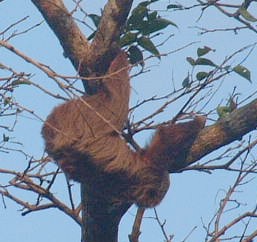
One of the most amazing animals we saw in Panama, was this
Two-Toed Sloth Choloepus spp. These arboreal (tree-living) mammals spend most of
their lives suspended upside-down, hanging by their strong limbs with
their curved claws over the branch. Sloths eat leaves by pulling the leaves very slowly to their
mouths. The motions of sloths are so slow that not even the very
observant jaguar (a rainforest cat of Central and south America) can
detect them. Sloths also have the advantage of having thick fur upon
which algae grows, thus further camouflaging them from would-be
predators. Sloths come down from the trees about once a week to defecate
and urinate. The females give birth to one young each year, which clings
to its mother until it can take care of itself. We were lucky to
see this one move sloooooowly from one branch to another!
BIRDS of Bonaire, Curacao, the San Blas Islands, and Panama
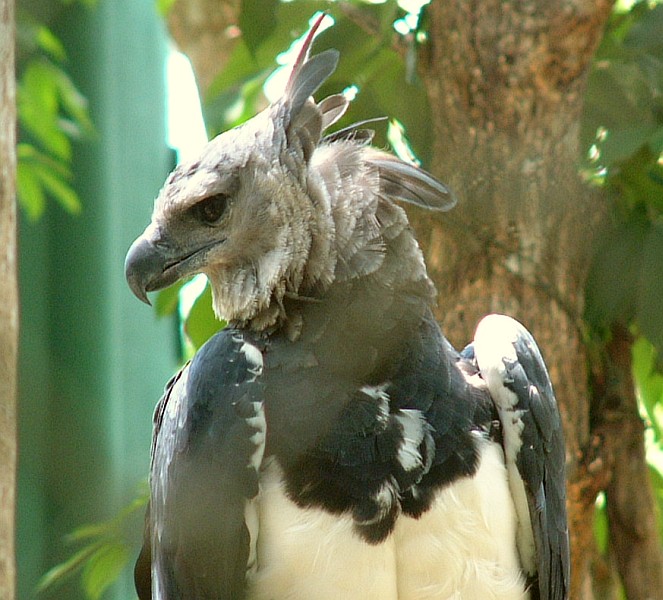
The Harpy EagleHarpia harpyja of Central and South
America is one of the largest eagles in the world. It weighs about
4.8 kg (about 10 lbs) and feeds on monkeys, sloths and other arboreal
mammals. It has a slate-colored back, white breast and dark band
across the upper chest and its gray head has a distinctive double crest.
These eagles live in the lowland virgin forests from southern Mexico to
northern Argentina, and their numbers are decreasing due to loss of
habitat.
Although the Troupial is the national bird of Venezuela, we saw
far more of them in the bushes and shrubs around Bonaire
than we ever did in Venezuela. Their brilliant orange-yellow breast with black and white wings were
unmistakable against the blue Caribbean sky.
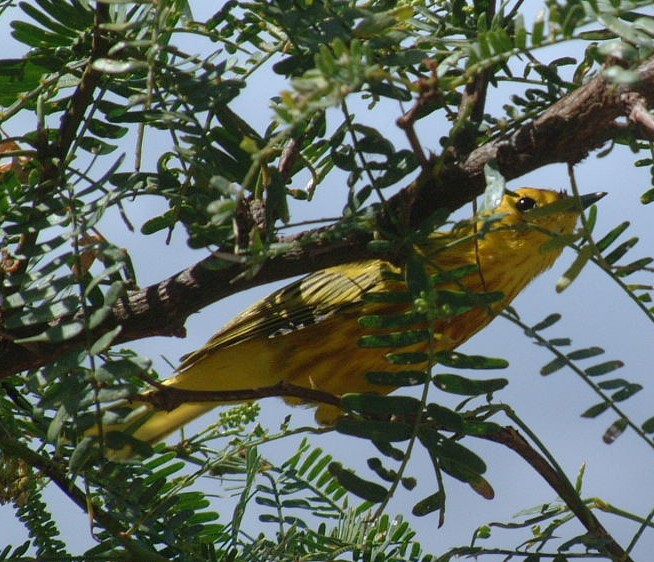
Also common in Bonaire
was the lovely Yellow Warbler with its streaked
breast and olive (female) or reddish-orange (male) cap. Called the Chirito in
Venezuela for its warbling song cheeri cheeri chiri chiri, it forages
conspicuously in low shrubs for insects.
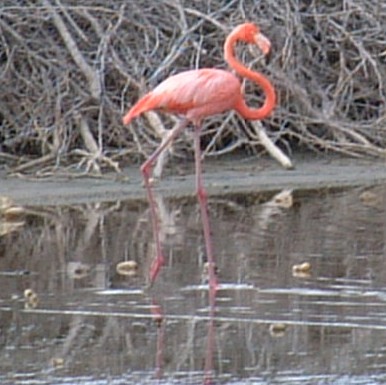
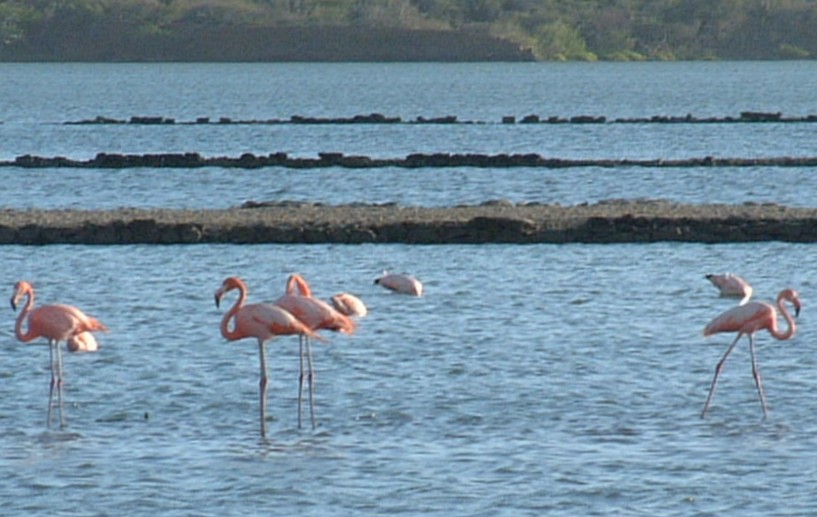
A beautiful and elegant addition to my birding were the pink American
Flamingoes that are resident in the salt pans of Bonaire
and Curacao as well. Flamingoes
feed on the brine shrimp in shallow lagoons, and the pink of their feathers is
due to their diet of these shrimp. They do a dance we came to call the Flamingo
Flamenco, raising and lowering one thin leg, then the other as they stir up the
water to locate their meals.
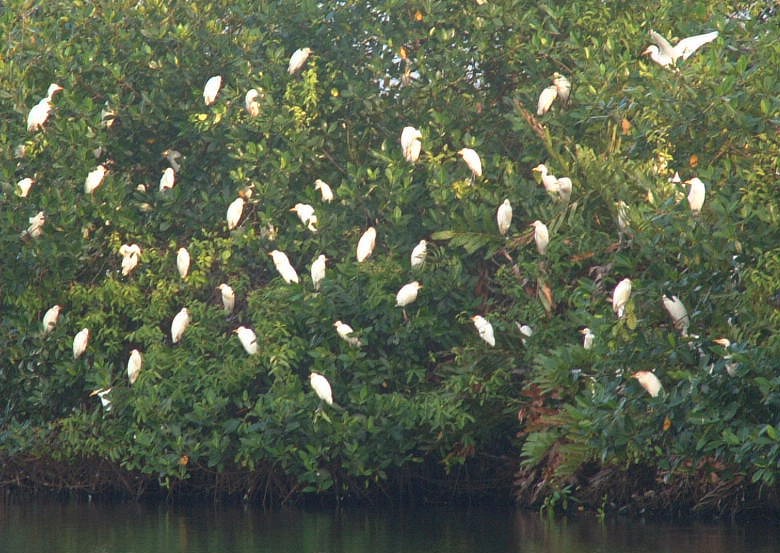
This Egret rookery was alive with squawking rustling, busy egrets up
the river in Portobello, Panama, a small town near the San Blas Islands.
Egrets are gregarious birds, although they may spend much of the day in
solitary, feeding on small fish by the water's edge, then returning each
evening to their large communal rookery.
In the San Blas Islands of
Panama we were amazed at the number of Spotted Rays that
leapt out of the water, sometimes as much as 7 feet (2m) high. Given that their
mouths are underneath their bodies, we can't figure what they're doing jumping
around like that. Perhaps they have a sense of fun???
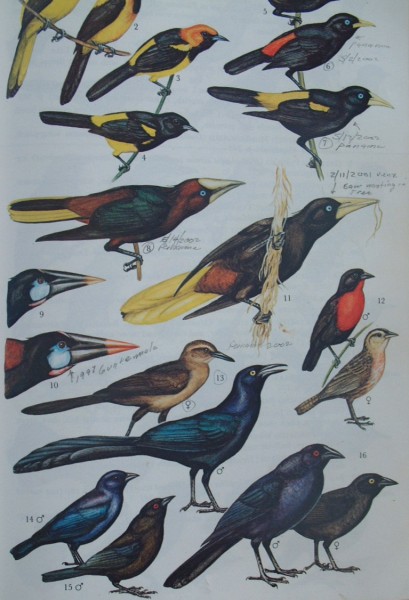
To the left is an example of a page in the
A Guide to the Birds of Panama
that we borrowed for a day. We had seen a black bird with a yellow back and
possible shoulder yellow while up the Chagres River of Panama. We had a few
choices, but with further study, it was clear to be the Yellow-Rumped Cacique,
a bird that was also found in Venezuela, and hence was in our
Guide to the Birds of Venezuela.
But it was nice to get confirmation from a Panama book as well.
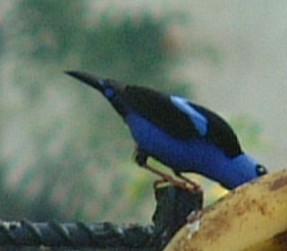
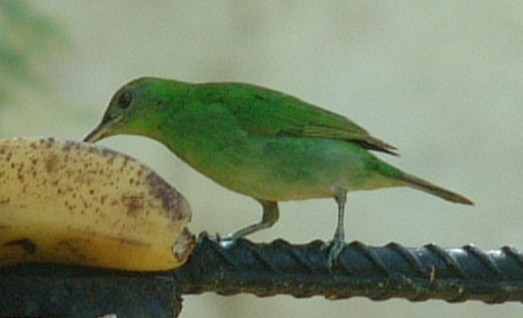
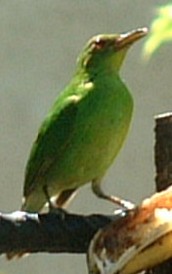
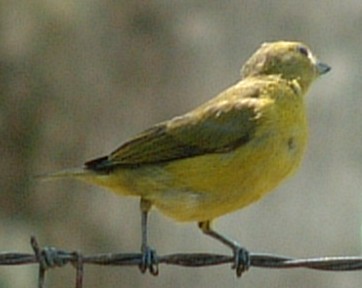
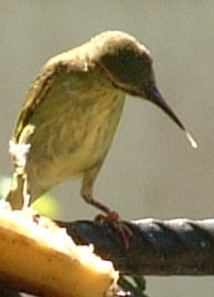
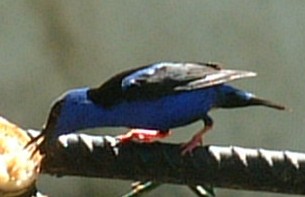
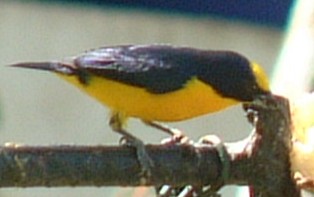
After we transited the Panama Canal we took a morning walk in the Panama City
Metropolitan Park which is reputed to be the largest metropolitan park in the world. It sure had
lots of trails and hills and birds! We stopped at the nursery to watch the local
birds feeding on a banana that had been put out to attract them. We were never
able to identify these birds, so if someone out there in cyber-ville can help,
let us know!
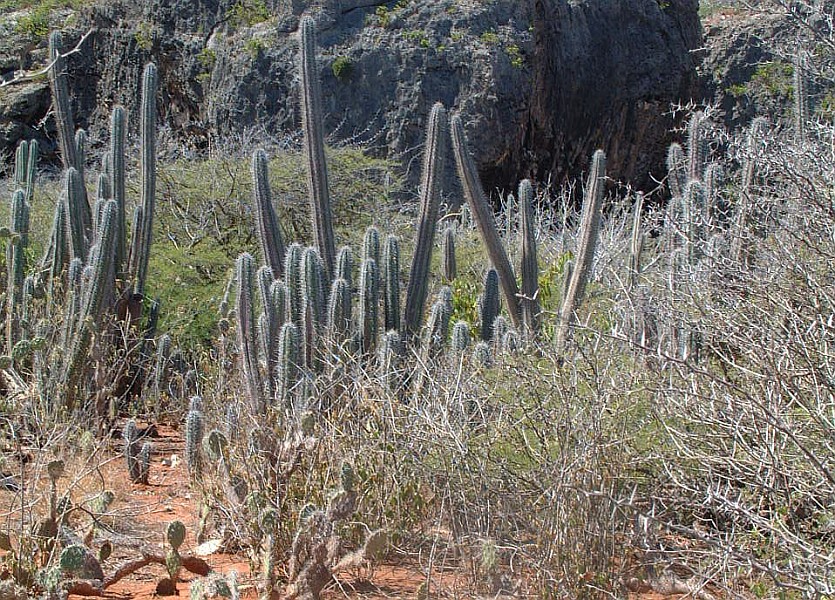
Plants of Bonaire, Curacao, and the San Blas Islands of Panama
Bonaire and
Curacao
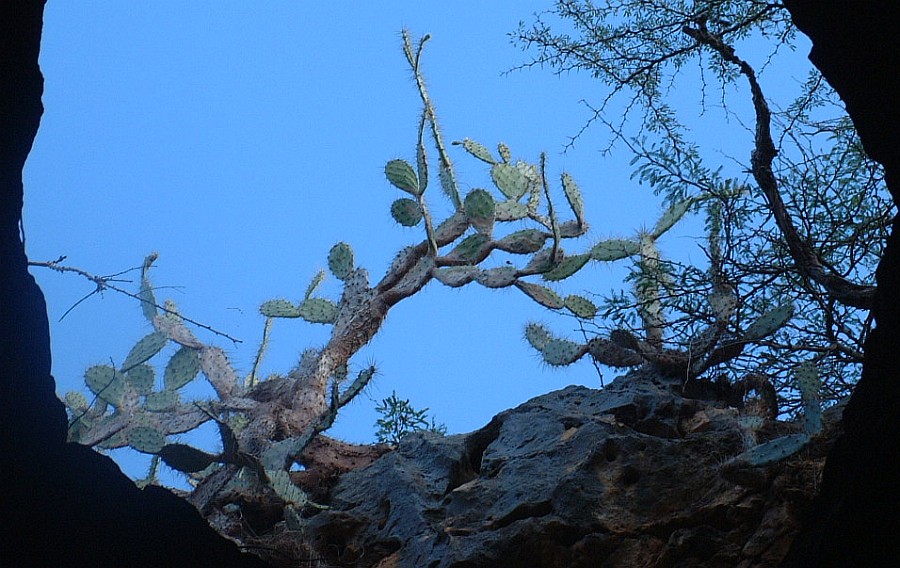
had landscapes similar to the offshore islands of Venezuela: xerophytic
(arid), and covered predominantly in cacti and thorn shrubs.
Many species of birds are particularly adapted to live in this
thorny, dry and harsh landscape.
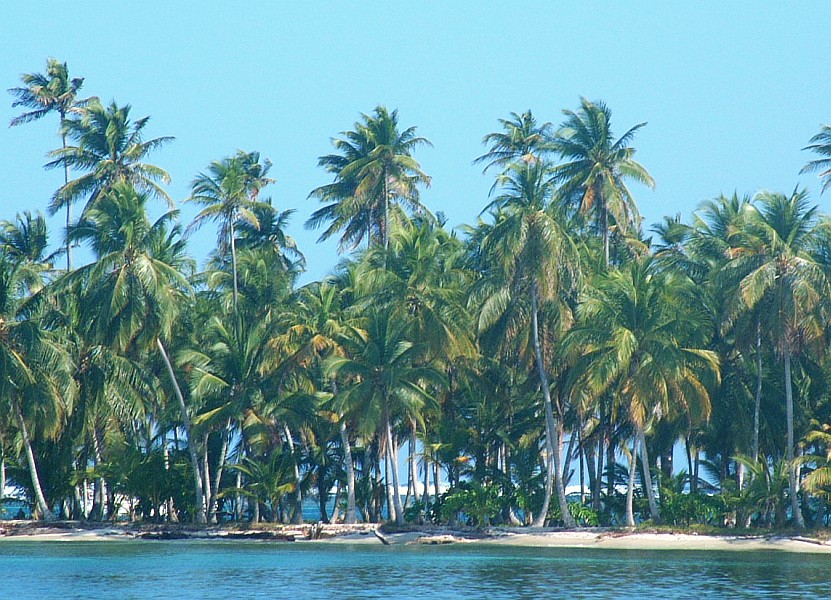
The San Blas Islands of Panama are covered in coconut palms.
The Cuna Indians take turns living on the small islands to "mirar los
cocos" which translates from Spanish as "watch the coconuts." What they
are actually doing is waiting for them to fall, then gathering them,
loading them into their small sailing pirogues, and taking them to
Colombia to sell. Very little else grows on the islands that are
covered in coconut trees. Coconuts are a valuable crop not only for the
sweet white "meat", but also the coconut oil that is used in many
cosmetics and food products.
 by Herbert Raffaele, James Wiley and others) and
A Guide to the Birds of Venezuela
by Herbert Raffaele, James Wiley and others) and
A Guide to the Birds of Venezuela by Schauensee and Phelps, published 1978, Princeton University Press, for bird
identification, though I would have loved to have a more complete guide
to the birds of Panama. In many cases, the Venezuelan and West Indian books list
species as migrants to or residents of Panama.
by Schauensee and Phelps, published 1978, Princeton University Press, for bird
identification, though I would have loved to have a more complete guide
to the birds of Panama. In many cases, the Venezuelan and West Indian books list
species as migrants to or residents of Panama.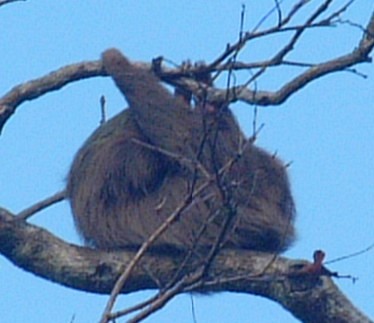
 that we borrowed for a day. We had seen a black bird with a yellow back and
possible shoulder yellow while up the Chagres River of Panama. We had a few
choices, but with further study, it was clear to be the Yellow-Rumped Cacique,
a bird that was also found in Venezuela, and hence was in our
that we borrowed for a day. We had seen a black bird with a yellow back and
possible shoulder yellow while up the Chagres River of Panama. We had a few
choices, but with further study, it was clear to be the Yellow-Rumped Cacique,
a bird that was also found in Venezuela, and hence was in our